From Pencils to Plastic: Rethinking What We Buy for School
The Back to School Shopping Habit
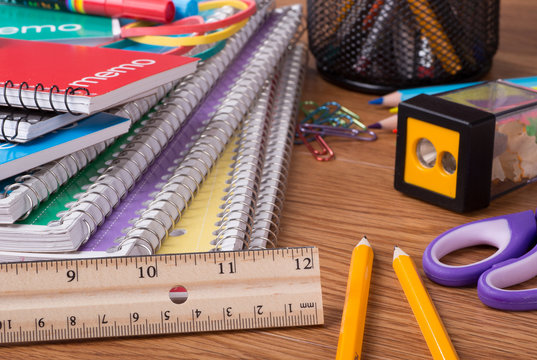
Back-to-School means time to buy new school supplies. Every year, millions of pencils, notebooks, backpacks, and more are sold for the new school year. And the stuff from last year? Well, it’s probably getting tossed. Looking back, can you remember using up every page of a notebook before getting a new one? Or using a pencil until it was the length of a toothpick? I know I can’t. For me, each school year required brand new everything, from gel pens to Trapper Keepers. Every class needed to have its own new, fresh notebook, even though last year’s notebooks were hardly a quarter used. While this practice of consumerism is good for the economy, it has some negative impacts on our environment.
The Hidden Impact of All That Stuff
First, plastic has become a mainstay in office and school supplies. Wooden pencils are now being replaced by plastic click pencils. Most backpacks have plastic components. Plastic is great because it’s durable and lasts forever. That’s also what makes it so harmful to the environment. That pen that just got thrown away because it was low on ink will likely sit in a landfill for millennia. At this rate, the earth will someday be completely covered in plastic. So why do we keep making nearly everything from plastic if it damages the environment? Simple, it’s cheap.
The Resource Cost Behind Everyday Items
Second, it’s wasteful of our resources. Most mass-produced items require the use of resources that seem limitless but actually aren’t. According to Schyns, Booij, and Hoekstra’s 2017 article in the Journal of Advances in Water Resources, a single sheet of paper requires 1.5 gallons of water to produce. That new cotton t-shirt you just purchased for school pictures? That has a water footprint of 659 gallons. Even refining oil requires water. Water is one of those resources that seems to have an endless supply, even though it doesn’t. To avoid future shortages, our water usage habits need to change, and it can start with how much we buy.
Rethinking the Back-to-School Checklist
So, what can be done to limit the impact of back-to-school shopping on the environment? It’s all in the three R’s: Reduce, Reuse, and Recycle. Instead of throwing out a used folder, reuse it for another year. Do you have used items like backpacks that you no longer need? Donate them so that someone else can use them. Do you really need every single color of highlighter available, or can you get by with less? By cutting back on what we buy new, reusing what we already have, and properly recycling appropriate items, we can make a huge difference in our community. If you just can’t avoid buying new items, keep an eye out for supplies made with recycled material!
Source:
Joep F. Schyns, Martijn J. Booij, Arjen Y. Hoekstra. “The water footprint of wood for lumber, pulp, paper, fuel and firewood”. Advances in Water Resources. Volume 107, 2017. Pages 490-501.
by Amy Keigher, Natural Resources Agent, 2025